mortality as a catalyst
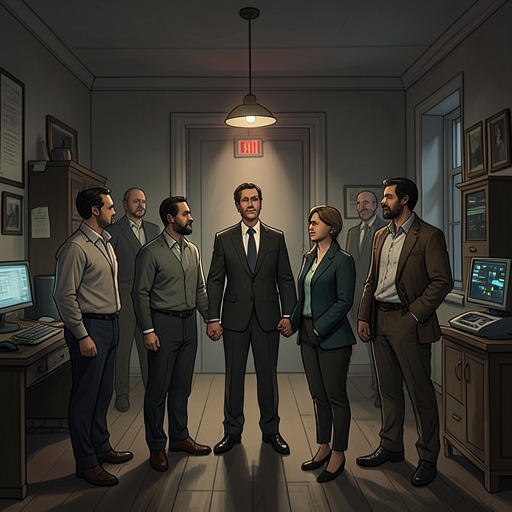
Nine Perfect StrangersMortality as a catalyst is both a genuine force in the guests’ lives and a tool Masha deliberately deploys at Tranquillum House. Her staged brush with death is meant to make the guests reconsider what they value, but the novel sets that exercise beside deaths that were neither chosen nor controlled: Zach’s suicide, Masha’s infant son’s accidental death, and the family’s continuing struggle to understand Zach’s loss. The contrast makes the idea powerful and ethically uneasy. Facing death may clarify the wish to live, but the possibility of transformation does not make another person’s grief a lesson to be imposed on them.
Grief and the lives left behind
Zoe’s account of Zach begins with the difficulty of saying his name. When Frances asks what her brother was called, Zoe answers that they were twins, and the name sounds strange and painful in her mouth. The twins’ matching names had once seemed cutesy; now the shared birthday is something Zoe has changed, refusing to celebrate on the day that binds her to her brother and to the loss. Grief is not an abstract insight here. It alters the calendar and makes an ordinary question physically difficult to answer.
The Marconis come to Tranquillum House because January is unbearable at home: that is where Zach hanged himself. Zoe also explains why the family stopped telling people how he died. Once they became, in her words, experts on suicide, they worried about contagion, while her parents feared she might follow her brother. Napoleon’s experience in a Tuesday-night group for newly bereaved parents offers a related but more guarded perspective. He tells them that research suggests some adolescent suicidal crises are brief and that many attempts follow only hours, or even minutes, of thought. He withholds the more unsettling implications he has learned: survivors can regret an attempt soon after making it; removing access to a means can allow an impulse to pass; and some losses may turn on an interruption that never came. His silence protects the parents from a counterfactual that might deepen their guilt, but it cannot settle the questions that grief keeps reopening.
For Napoleon, those questions have become a loop. He re-examines the morning of Zach’s death like a homicide detective, replaying his thumb pressing the phone’s snooze button and imagining the alternative in which he gets out of bed. Heather found Zach; Napoleon remembers hearing his wife scream and running upstairs as though through mud. The remembered action is small, but repetition enlarges it into an imagined point of decision: if he had not snoozed, perhaps something would have changed. The narrative presents that possibility as the father’s recurring torment, not as proof that he could have prevented the death.
The imposed encounter with death
Masha announces an exercise that turns mortality into a group performance. Invoking the instruction to radiate boundless love, she calls the activity Death Sentence, then revises its name to Death Row. She appoints herself judge and gives each participant one night to prepare a five-minute defense of a chosen client. At dawn, they must argue why that person deserves to live. Masha sharpens the premise with scarcity: imagine only one parachute or one place in a lifeboat. Who should survive when conventional distinctions such as age or gender cannot decide the case?
The exercise reframes survival as a question that must be argued rather than assumed. Tony objects that everyone deserves to live, but Masha insists on the particularity of the task: each advocate must make a case for one person. The setup can expose attachment and value by forcing participants to picture a world in which not everyone can be saved. Yet its theatrical rules also place Masha in control of the imagined emergency. The moral pressure comes not from an actual sentence of death but from her demand that the guests rehearse choosing who should escape it.
That demand follows Masha’s own account of mortality. She tells the guests that she saw Yao’s birthmark during her near-death experience and describes confronting her mortality as remarkable and wonderful. She promises them a glimpse of death that will bring together the retreat’s silence, psychedelic therapy, and escape puzzle. The progression matters: an experience that Masha presents as personally transformative becomes the warrant for arranging a frightening experience for others. Her language treats fear as a route to insight, even as Heather questions whether Yao is merely asleep and the guests have reason to doubt what they are being told.
Fear, revelation, and the wish to live
As events unfold, Masha’s voice tells the guests that deep transformation requires detachment from their assumptions. She declares that the house is burning and that possessions mean nothing; smoke begins to drift beneath the locked oak door. The threat is staged, but the guests do not initially know that. Zoe asks whether they are all going to die and whether Masha is seriously going to let them. Heather proposes covering their heads and faces with wet towels to guard against smoke inhalation. The prospect of death is made concrete through the sealed room, the smoke, and the need to decide what to do next.
Tony’s response gives the exercise its clearest intended effect. Believing himself close to death, he realizes he is not ready: fifty-six years do not feel long enough. His thoughts turn to specific possible futures. He wants to repaint his house, get another puppy without feeling that doing so would betray Banjo, go to the beach, eat breakfast at the nearby café while reading the paper, listen to music, travel to Holland, and watch his granddaughter in an Irish dancing competition. He also reconsiders the life he has treated as already spent. He wonders why he resisted Mimi’s suggestion that he coach children’s football and imagines teaching them to see the music and poetry in the game. Fear brings no general revelation detached from ordinary life; it restores the value of particular pleasures, relationships, and unfinished choices.
The episode also marks a boundary between insight and coercion. Lars eventually shouts that Masha has scared them half to death and asks to return to their rooms. Afterward, the guests consider that the fire may be controlled and intended to make them face death. The possibility that the danger is manufactured does not erase the fear they experienced; nor does their fear automatically validate Masha’s method. The exercise’s apparent success and its violation of the guests’ sense of safety remain in tension.
The limits and aftermath of transformation
The book places the staged threat beside losses that cannot be converted so easily into a lesson. Zoe says that after Zach died she was angry with him, feeling that he had done it deliberately to make her feel bad forever. During the psychedelic experience, she feels that they talked again; the experience offers her a possible change in how she carries the relationship, not an explanation that reverses the death. Frances, too, describes feeling that she had spoken with her dead friend Gillian and her father, an encounter that felt more vivid than a dream. These accounts make the dead present to the living through memory and experience, while leaving open what such encounters mean.
Masha’s own bereavement further complicates her celebration of confrontation. Years earlier, she went to her infant son’s bedroom after finishing what she was doing and found him dead; he had strangled himself accidentally with the long white cord from the window blind. The brief delay becomes part of the circumstances she remembers, and her later claim to have faced mortality carries the weight of a loss that was sudden and irreversible. The novel does not equate that accident with the Marconis’ experience or with the guests’ staged danger. Instead, it shows why a doctrine that treats mortality as a catalyst cannot contain every form of grief.
Nor does renewed awareness of life produce a simple, lasting recovery. Six weeks after returning from Tranquillum House, Napoleon is waiting for his first available appointment with a psychiatrist, referred by his general practitioner. He has kept teaching, cooking, talking to Heather and Zoe, and running the support group, but describes his existence as effortful: the sky seems drained of colour, his senses muted, and getting up feels like moving through mud. His condition makes the distance between a moment of confrontation and sustained change unmistakable. In the novel, mortality can disclose what a person still wants, but insight does not cancel bereavement, guarantee healing, or make a traumatic method harmless.